You already know this one, even if you’ve never named it. A bad night’s sleep isn’t just tiredness the next day. It’s the short fuse in a conversation that could have been much easier. It’s reaching for something sugary at 3 pm you wouldn’t normally touch. It’s the workout you skip, the patience you don’t have left for your kids or your partner, the slightly-worse version of you that shows up to everything until you finally get a proper night’s rest again. One disruption, a cascade of dominoes, each one knocking into the next.
That cascade is not a coincidence, and it’s not a coping failure. It’s the body working exactly as it’s designed: as an integrated whole.
Health Is Not a Collection of Separate Parts
Physical, mental, emotional, and spiritual health don’t exist in isolation. They exist in constant conversation with each other. Nutrition, movement, sleep, stress, environment, relationships, emotional wellbeing; none of it sits in its own lane. A shift in one area moves through all the others, whether we’re paying attention or not.
True health sees the whole person. Not as a checklist to work through, ticking off sleep and steps and greens, but as an interconnected system where each area shapes the next. When we ignore that, we never actually get an accurate picture of what’s going on. We just get a snapshot of one part of a much bigger, moving picture.
Where Our Medical Model Gets Caught Out
This is where our Western health and medical system, for everything it does well, tends to lose the plot. It’s built on specialisation: a doctor for this, a consultant for that, each one treating a part in isolation rather than seeing the whole person in front of them. That has real value; specialisation is precisely why modern medicine is extraordinary at acute, urgent care. But it also means we often end up treating symptoms on repeat without ever asking what’s actually driving them, which is where root cause thinking picks up the thread this principle starts.
It’s not a coincidence that the biopsychosocial model, developed in medicine specifically to correct this blind spot, exists at all. It proposes that health and illness emerge from the interaction of biological, psychological, and social factors, not biology alone, and that changes in one of those layers ripple through the others. That’s a modern, clinical reframing of something ancient traditions never separated in the first place. And the sleep example isn’t just a nice metaphor either: a meta-analysis pooling 64 studies found that sleep loss consistently and measurably impairs mood and emotional regulation, exactly the kind of physical-to-emotional spillover this principle describes.
What Ancient Traditions Never Forgot
Ayurveda and Traditional Chinese Medicine, among others, have long recognised and honoured the human organism as it actually is: mind, body, emotions, and spirit, interconnected and interdependent. Ayurveda, one of the world’s oldest healing systems, was built entirely around the idea that physical constitution, mental state, and lifestyle are inseparable threads of the same fabric. Traditional Chinese Medicine reads the body through the same lens; a disturbance in one organ system is understood to show up as a pattern across sleep, mood, digestion, and energy, not as an isolated fault in one part.
This isn’t about dismissing modern medicine, and it never has been. It’s about recognising its limitations and widening our view of what health actually means. When we approach health holistically, staying curious about how every area connects to every other, we start asking better questions, seeing clearer patterns, and making changes that actually last, rather than chasing the next isolated symptom.
Where the Line Is
Holistic doesn’t mean vague, and it doesn’t mean untreated. If something acute is happening- a suspected heart attack, a serious injury, anything that needs immediate attention- that’s not the moment for a holistic reflection on root causes. That’s a moment for emergency care, full stop. Holistic thinking lives alongside conventional medicine, not instead of it; it’s simply a wider lens for everything that isn’t an emergency, which, for most of us, most of the time, is most of our health.
TL;DR
Health isn’t a set of separate boxes to check: physical, mental, emotional, spiritual. It’s one interconnected system, and a disruption in one area moves through all the others, whether we notice it or not. Our medical model, built on specialisation, often misses this and treats symptoms in isolation. Ancient traditions like Ayurveda and Traditional Chinese Medicine never made that mistake, and modern frameworks like the biopsychosocial model are now catching up to the same truth. See the whole person, not just the part that’s currently loudest.
Go Deeper
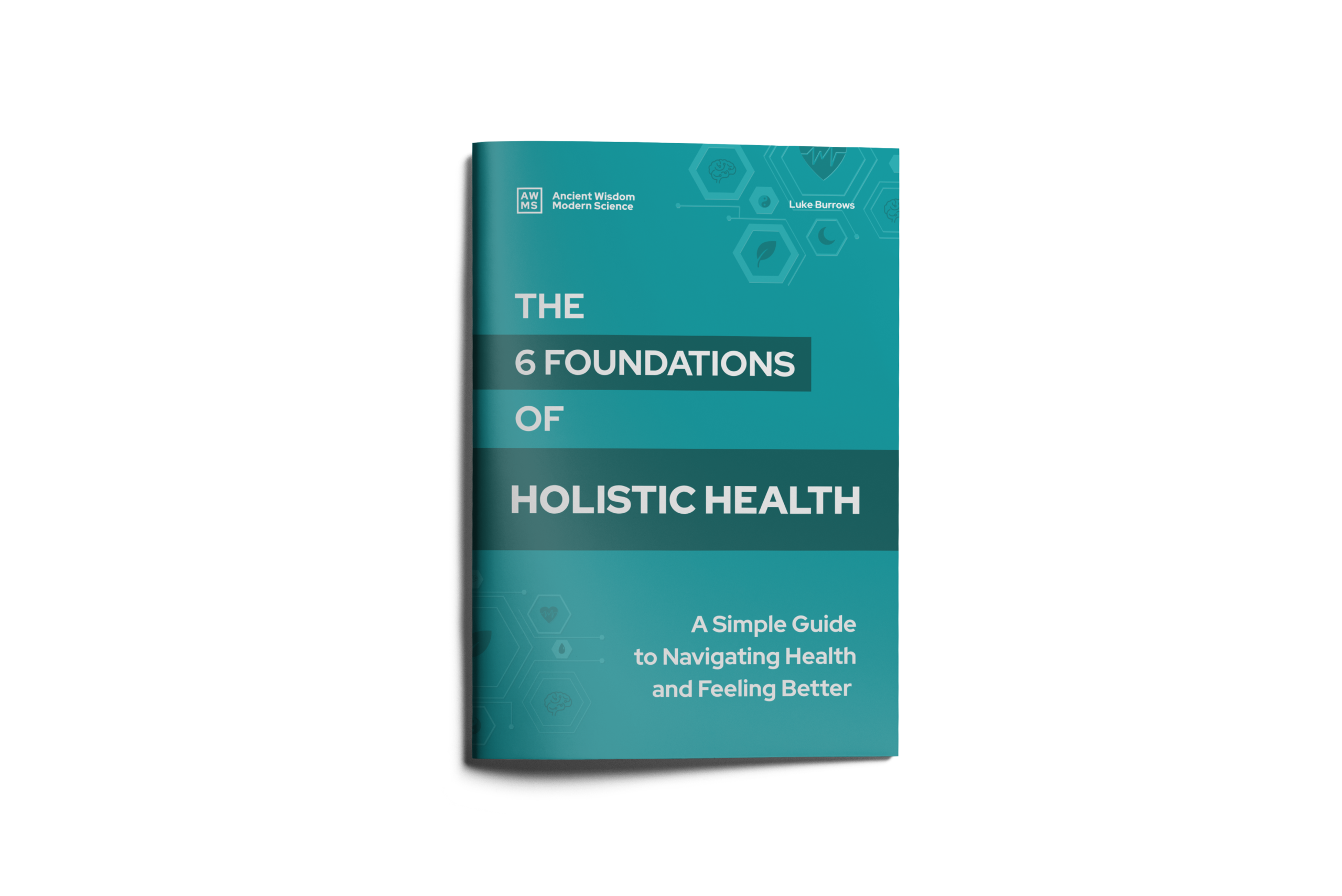
This principle is one of six that make up the AWMS framework. If it resonates, all six principles can be found together in The 6 Foundations of Holistic Health, a free guide you can download and keep as a starting point for navigating your own health.
Key Takeaways on True Health
- Interconnected Systems: Your physical, emotional, and mental wellbeing constantly interact, meaning a shift in one area impacts your entire daily experience. When you learn to view these connections, you see how sleep affects your mood and energy.
- Medical Model Limitations: Western medicine treats acute emergencies brilliantly, yet specialisation often treats symptoms repeatedly without addressing the true drivers.
- Ancient Wisdom: Traditional practices like Ayurveda view your physical state, mind, and lifestyle as inseparable elements of one system.
- Knowing the Difference: Immediate medical care is essential for acute crises, while everyday health thrives when you look at the complete picture.
FAQs for True Health Is Holistic: Why Nothing in Health Stands Alone
Why does a bad night of sleep affect your mood and choices?
Poor sleep triggers a physical domino effect across your body. It reduces patience and increases sugar cravings, showing how physical rest directly shapes emotional wellbeing and more. You can learn more about these connected patterns by observing your daily routines.
How does the biopsychosocial model explain daily wellbeing?
This model shows that biological, psychological, and social factors interact constantly. A change in your physical state ripples into your thoughts and social interactions, proving that no aspect of health exists in isolation.
When should you seek immediate conventional medical care?
Urgent conditions like severe injuries or chest pain require emergency medical attention. Whole-person thinking works alongside modern medicine rather than replacing acute treatment.
What can traditional health systems teach us about wellbeing?
Systems like Ayurveda treat mind, body, and spirit as one unified fabric. They offer valuable frameworks for how your lifestyle, habits, and environment influence balance.
This is a framework born from lived experience, not medical advice, and is for informational purposes only, even if and regardless of whether it features the advice of physicians and medical practitioners. This article is not, nor is it intended to be, a substitute for professional medical advice, diagnosis, or treatment and should never be relied upon for specific medical advice. If something here raises questions about your own health, please visit a qualified professional.