CBT worked, for about twelve weeks. It helped, and it’s worth saying that, because this isn’t a piece against conventional treatment. But then it stopped working, and the panic attacks that had brought Luke to a doctor’s office in the first place didn’t go away. They just stopped responding to the tool that had been managing them. That’s when the deeper questions started: not “how do I get through today,” but “what is actually driving this?” Sleep, movement, nutrition, the social environment, all of it turned out to matter more than any single technique ever could on its own.
That’s the difference this principle is built on. Managing symptoms is not the same as true healing.
What Our Medical System Is Built On
A pill for this, a prescription for that. Short-term relief that’s sometimes necessary, but which rarely asks the deeper question: what’s actually driving this in the first place, and what happens if it keeps quietly progressing underneath?
Think back to your last GP appointment. Somewhere around ten or fifteen minutes, if that. Hardly enough time to describe what’s going on, let alone explore the fuller picture: your stress levels, your sleep, your relationships, your history. That’s not a criticism of doctors, most of whom entered the profession specifically to help people. It’s a structural reality. A landmark review of 28.5 million consultations across 67 countries found that nearly half the world’s population gets five minutes or less with their primary care physician, and the UK sits toward the shorter end of that range even among wealthy nations. That’s the system working as designed, and it’s a design built around output, not depth, and certainty, not true healing.
Symptoms are not the enemy in all this. They’re the body’s way of telling us something is awry, a signal, a message. Ignoring a message doesn’t make it go away. It tends to make it louder.
The Science Behind “Louder”
That’s not just a turn of phrase either. The physiologist Bruce McEwen described this mechanism directly through the concept of allostatic load: the cumulative wear and tear that builds up in the body when stress responses are repeatedly triggered without resolution. Left unaddressed, that cumulative strain sets off what McEwen’s own research called a domino effect across interdependent biological systems, including the immune, cardiovascular, and metabolic systems, until individual symptoms start turning into something more serious. Suppressing the signal doesn’t switch off the underlying process. It just buys time while that process continues in the background.
What Ancient Medicine Called the Root and the Branch
This distinction is old. Traditional Chinese Medicine has long organised treatment around two categories: biao, the branch or surface symptom, and ben, the root. Treating the branch alone might ease things temporarily, but TCM practice has always held that lasting resolution means addressing the root, even when that takes longer and asks more of the patient. Hippocrates, working in an entirely separate tradition, arrived at something similar with the idea of vis medicatrix naturae, the healing power of nature: the physician’s role wasn’t to override the body, but to support the conditions that let it heal itself. Two traditions, continents apart, coming to the same basic instinct this principle is built on.
Approaching Symptoms With Curiosity
This means asking better questions. What’s driving the chronic fatigue, the digestive issues, the persistent anxiety, the recurring pain? Chronic stress? Poor nutrition? A toxic environment? Lack of movement? Unresolved emotional patterns? Often it’s a combination, which is exactly why holistic thinking and root cause thinking are inseparable. When we take the time to understand what’s really going on beneath the surface, and consider the whole person rather than the presenting symptom alone, something shifts. We stop chasing short-term relief and start creating change that actually lasts.
Where the Line Is
None of this means avoiding medication or dismissing a diagnosis. Symptom relief has its place, especially acutely, and for some people and some conditions, ongoing medical management is exactly the right root-cause-informed choice. This is about asking one more question before stopping: not just “what makes this go away,” but “what’s actually causing it.” If you’ve left appointments feeling unheard or handed a prescription without real investigation, that experience is real, and it’s the standard procedure of care. It doesn’t mean the answers don’t exist, only that it might be worth looking somewhere different, with the caution and discernment we need while navigating all areas of health.
TL;DR
Treating symptoms provides relief, not healing. Our medical system, built around short consultations and quick prescriptions, is structurally set up to manage what’s visible rather than investigate what’s driving it, and the research on consultation time backs that up. Left unaddressed, the physiological strain behind a symptom compounds; McEwen’s allostatic load research even calls it a domino effect. Traditional Chinese Medicine’s root-and-branch distinction and Hippocrates’ idea of supporting the body’s own healing power both point to the same instinct: treat what’s underneath, not just what’s loudest.
Go Deeper
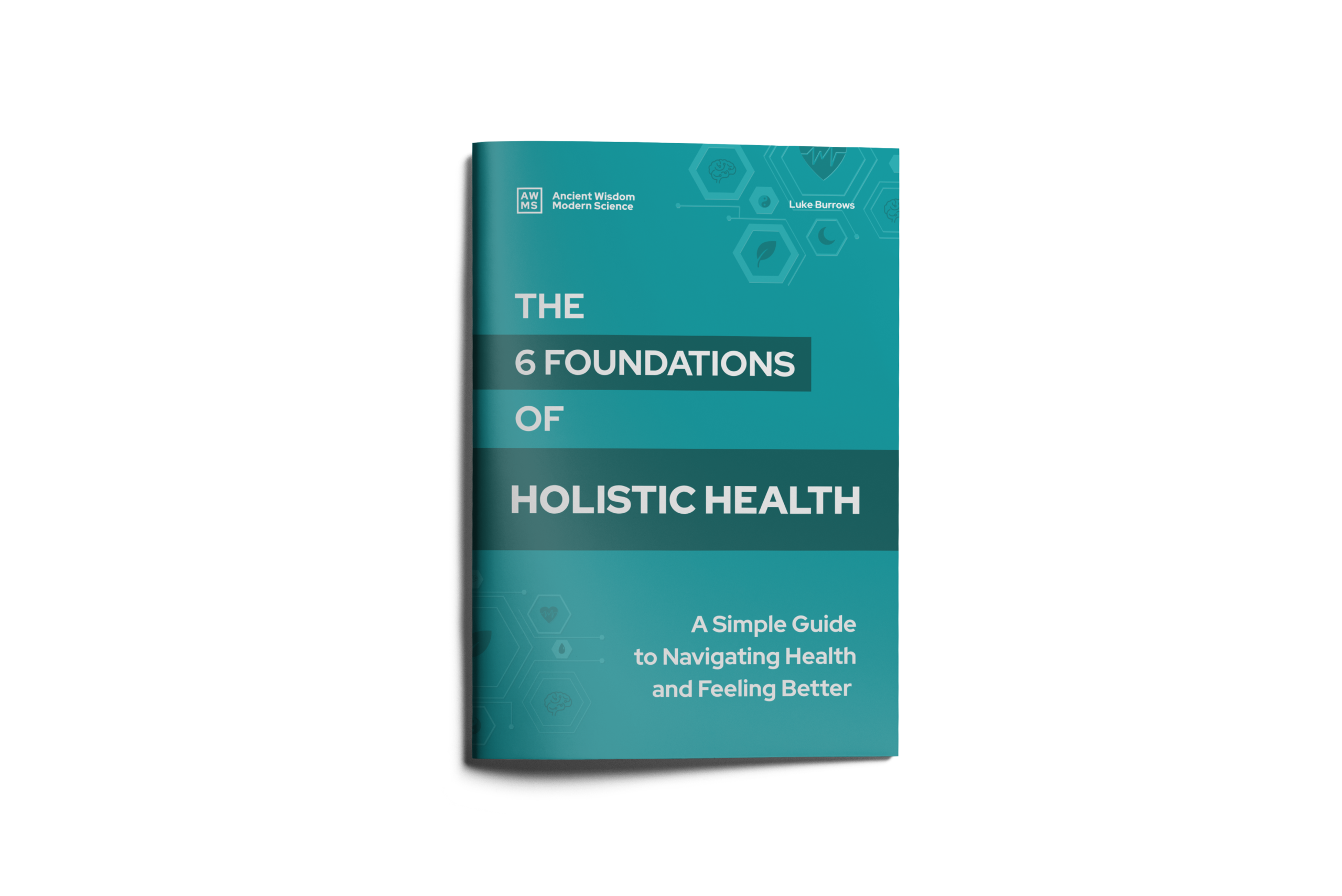
This principle is one of six that make up the AWMS framework. If it resonates, all six principles can be found together in The 6 Foundations of Holistic Health, a free guide you can download and keep as a starting point for navigating your own health.
Key Takeaways on Healing vs Managing Symptoms
- Healthcare System Limits: Standard medical appointments offer brief relief, which often leaves the primary drivers of your health issues unexamined.
- Physiological Strain: Ignoring early warning signs leads to allostatic load, where stress builds up and affects multiple body systems over time.
- Ancient Wisdom: Historical practices from Traditional Chinese Medicine to Hippocrates prioritise treating the root cause rather than managing surface symptoms.
- Curiosity Over Suppression: You can learn to explore what drives recurring issues like fatigue or anxiety instead of simply shutting down symptom signals.
- Balanced Perspective: Medication serves an important acute role, yet long-term recovery depends on asking what causes your health challenges.
FAQs for Root Cause Over Symptoms: Why Managing Isn’t Healing
Why does managing symptoms fail to heal chronic conditions?
Managing symptoms offers temporary relief, but it leaves underlying causes untouched. When you only address the surface level, stress and strain continue to build up in your body, often leading to bigger health issues later on.
How does allostatic load affect your body?
Allostatic load represents the cumulative wear and tear on your body when stress responses stay active. Over time, this creates a domino effect across your immune, metabolic, and cardiovascular systems.
What can ancient medical traditions teach us about healing?
Traditions like Traditional Chinese Medicine separate surface symptoms from root causes. They focus on supporting your body’s natural healing ability rather than simply masking individual signs of illness.
How can you learn to identify the root cause of your symptoms?
Start by asking questions about your daily life, sleep, nutrition, and stress levels. Viewing symptoms as warning signals helps you address the real drivers behind persistent health problems.
This is a framework born from lived experience, not medical advice, and is for informational purposes only, even if and regardless of whether it features the advice of physicians and medical practitioners. This article is not, nor is it intended to be, a substitute for professional medical advice, diagnosis, or treatment and should never be relied upon for specific medical advice. If something here raises questions about your own health, please visit a qualified professional.