There was a period when I couldn’t drive to work without a panic attack. Couldn’t walk into a supermarket. Couldn’t trust my own body to get me through an ordinary Tuesday. I’d been pushing through for years by then, treating my health as the thing I’d get to once everything else was sorted: once work calmed down, once I’d proved myself, once there was time. There was never time. And eventually my body stopped asking politely and started shutting things down.
That’s what happens when health isn’t first. It doesn’t announce itself as a crisis on day one. It compounds quietly, in the background, while we’re busy being productive, being liked, being fine, until it isn’t quiet anymore.
Why Health Has to Come First
Without health, we have nothing. Most of us would agree with that sentence instantly. Almost none of us live as we believe we do. That gap, between what we know and what we do, is the whole reason this principle exists, and it’s worth naming honestly before we go any further: this isn’t a failure of information. Most of us already know what helps us feel better. Researchers call this the knowledge–behaviour gap, and it shows up everywhere in health: knowing rarely translates directly into doing, because the implementation depends on far more than facts. It depends on belief in our own ability to follow through, and on the environment we reside in.
We’re not short on health information. We’re short on health being first.
What “Health First” Actually Means
This isn’t a slogan for a water bottle. Health first means health is the foundation everything else in life gets built on, not one item competing for space on a to-do list alongside it. It includes the physical, obviously, but also the mental, emotional, spiritual, and relational. Miss one of those and the others eventually feel it too; we’ll come back to that domino effect in the next piece in this series. For now, the point is simpler: when health comes first, we don’t get less done elsewhere. We tend to get more, and better, because we’re building on solid ground instead of borrowing against it.
Two things quietly displace health more than anything else, and they’re worth naming plainly.
When Work Quietly Takes Priority Over Health
1. Work and career
Late nights, early starts, skipped meals, the meeting that runs into lunch, the version of “busy” that we wear as a badge rather than notice as a warning sign. None of this makes anyone a bad person. Most of us are doing the best we can with bills and real responsibilities, and there is nothing wrong with taking work seriously.
It becomes a problem when work consistently comes at the cost of health, because that cost doesn’t stay flat. It compounds. Chronic occupational stress has been linked in a growing body of research to elevated risk of cardiovascular disease, hypertension, insulin resistance, and clinically significant anxiety and depression, precisely the slow-burning conditions that don’t show up as an emergency until they do. As the writer Edward Stanley put it, “If you don’t make time for your wellness, you will be forced to make time for your illness.” And once illness arrives, the work stops anyway. Health and career were never supposed to compete. They’re symbiotic when we let them be: better sleep, better nutrition, better stress management don’t just protect us, they sharpen the thinking and energy we bring to our work.
2. Fitting in and social pressure
The pull to belong is ancient, and it isn’t going anywhere; it’s part of how we survived as a species. But that same instinct can quietly steer us away from our own best intentions. At one end of the spectrum, it looks serious: drinking, smoking, other people’s habits becoming our own. At the other, it looks almost invisible: the McDonald’s run a friend suggests when you’d decided to eat differently this month, the sedentary evening that “everyone” is having.
Will one of those moments undo anything? No. But occasional has a habit of turning habitual when it’s also the social norm, and saying no in that moment takes something most of us could use more of: a bit of courage, a bit of self-respect. The reassuring part is that most people care far less than we assume they will. And if choosing your health does cost you some social friction here and there, that’s often a sign it’s time to find people further down the same road, who’ll walk alongside you rather than pull you off course.
Where This Shows Up in the Ancient Wisdom
Long before “wellness” was a category, this was simply how health was practised. In Traditional Chinese Medicine, the Huangdi Neijing (the Yellow Emperor’s Inner Classic, one of the oldest surviving medical texts) puts it almost exactly as this principle does: “the superior physician treats disease before it has appeared.” Health came first, before crisis, not after it. Ancient Greek medicine carried a version of the same idea in mens sana in corpore sano, a sound mind in a sound body, health as the base layer everything else in a life stands on, not an accessory to it. Neither tradition treated health as something to attend to once the rest of life allowed for it. They treated it as the precondition for the rest of life working at all.
Where the Line Is
Health first is not a rejection of work, ambition, or community. It’s not “quit your job” or “cut off anyone who orders takeaways.” It’s simply about where everything else sits: ideally around your health, never instead of it. And it isn’t a one-time decision either. It’s a thousand small ones, repeated, that either protect the foundation or quietly erode it.
It also isn’t a replacement for medical care. If something in your body is telling you it needs attention now – chest pain, a symptom that won’t resolve, anything urgent – that’s not a moment for lifestyle reflection. That’s a moment for a doctor, or often emergency care, full stop. Health first includes knowing when to get out of your own way and let conventional medicine do what it does best.
TL;DR
Health is the foundation everything else in life is built on, not a line item competing with work and social life for our attention. Most of us already know this; the gap is in living it. Two things most often displace it: work and career pushing past the point of sustainability, and social pressure quietly steering us away from our own intentions. Neither has to be rejected to put health first. It just has to come first, one conscious choice at a time.
Go Deeper
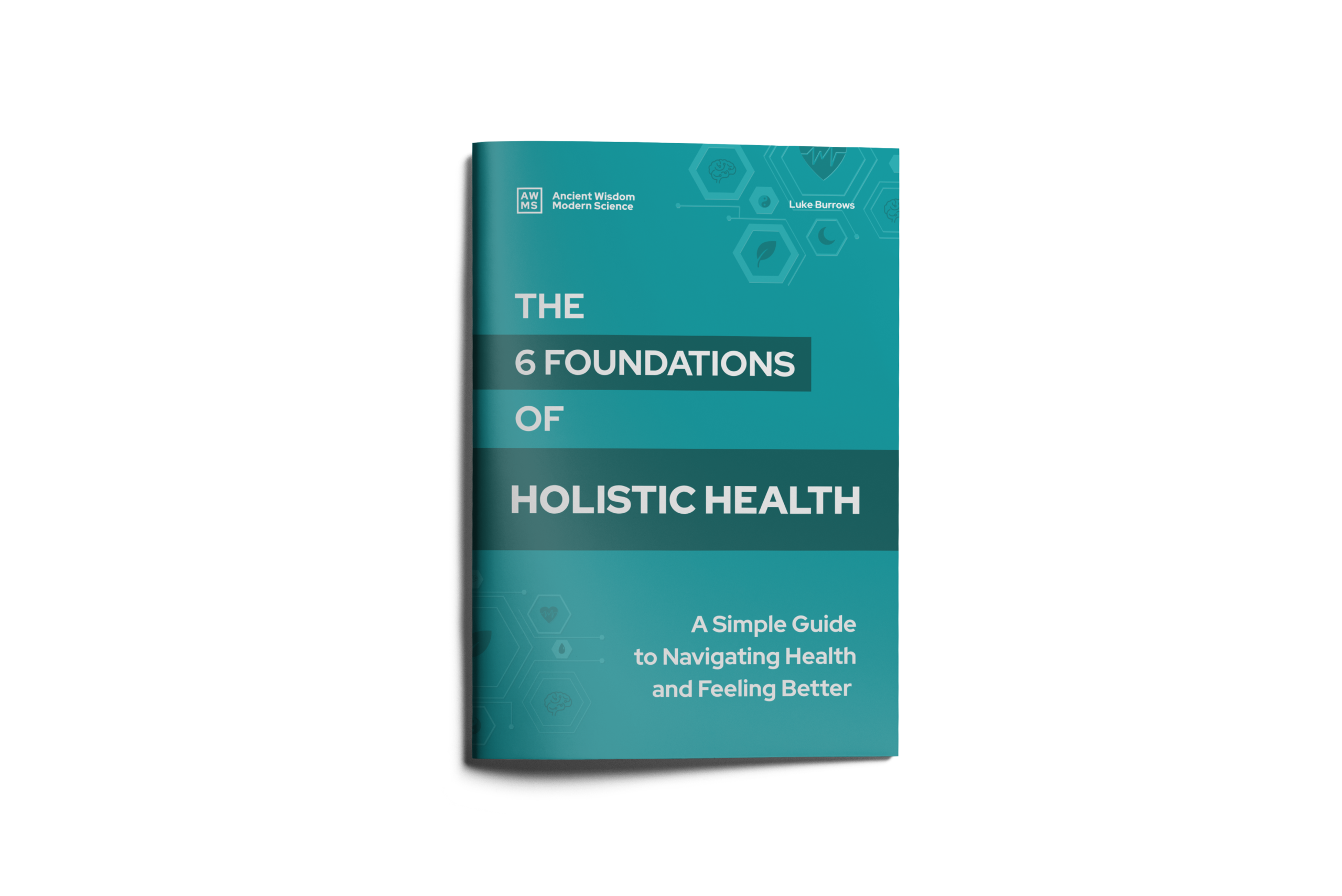
This principle is one of six that make up the AWMS framework. If it resonates, all six principles can be found together in The 6 Foundations of Holistic Health, a free guide you can download and keep as a starting point for navigating your own health.
Key Takeaways on Putting Your Health First
- The Knowledge-Behaviour Gap: You might know what’s healthy, but actually doing it is the real challenge. This gap exists because implementing healthy habits depends on your beliefs and environment, not just information.
- Health as a Foundation: Putting health first means treating it as the solid ground on which you build your life, not just another item on your to-do list. This includes your mental, emotional, and physical wellbeing.
- Work-Health Balance: Consistently prioritising work over your health creates a compounding cost. Chronic stress can lead to serious long-term illnesses, which ultimately stops the work anyway.
- Social Pressures: The desire to fit in can quietly steer you away from your health goals. Saying no to social norms that don’t serve your wellbeing is a crucial part of maintaining your foundation.
- Ancient Wisdom Agrees: Historical health practices, from Traditional Chinese Medicine to Ancient Greek philosophy, also taught that health is a precondition for a good life, not something to fix only when it breaks.
- Finding the Line: Prioritising health doesn’t mean abandoning your career or social life. It means making thousands of small, repeated choices that protect your wellbeing and knowing when to seek professional medical care.
FAQs for Health First: Why Health Has to Come First
What does it really mean to put ‘health first’?
It means viewing your health as the foundation for everything else in your life, including your career and relationships. It’s not just about diet and exercise, but also your mental, emotional, and spiritual wellbeing. When your health is solid, you perform better in all other areas.
Why is it so hard to prioritise health when I know I should?
This is a common struggle known as the ‘knowledge-behaviour gap’. Knowing something is good for you doesn’t automatically translate into doing it. Real change depends on your belief in your ability to follow through and creating an environment that supports your healthy choices.
How can my job negatively affect my health?
When work consistently demands late nights, skipped meals, and high stress levels, it comes at a cost to your health. This chronic occupational stress is linked to an increased risk of serious conditions like heart disease, hypertension, and anxiety over time.
Does putting my health first mean I have to be anti-social?
Not at all. It’s about making conscious choices. While social pressure can sometimes lead you away from your goals, you don’t have to cut people off. It’s about finding a balance, having the courage to stick to your intentions, and perhaps finding friends who support your healthy lifestyle.
Is ‘health first’ a replacement for seeing a doctor?
Absolutely not. This principle is about preventative, foundational care through your daily choices. If you experience urgent symptoms like chest pain or something that won’t resolve, you should always seek professional medical advice from a doctor or emergency care immediately.
This is a framework born from lived experience, not medical advice, and is for informational purposes only, even if and regardless of whether it features the advice of physicians and medical practitioners. This article is not, nor is it intended to be, a substitute for professional medical advice, diagnosis, or treatment and should never be relied upon for specific medical advice. If something here raises questions about your own health, please visit a qualified professional.